I have a problem with drones.
In December 2018, my holiday travel was disrupted by the Gatwick airport (London, England) drone scare, but long prior to that, when my offspring participated in rowing competitions, I was alarmed by what I perceived to be the danger of hobbyist drones out over the water which could easily have caused a crew to founder, and perhaps worse.
Of course, there is also the problem of permission. One is not supposed, under the law, to be permitted to photograph and disseminate photographs of under-age children. When under age girls are rowing, they are usually scantily clad and often wet.
I do not sunbathe nude on my secluded, enclosed flat roof... perish the thought... but it is bad enough that Google routinely photographs my private flat spaces. I do not want my neighbors in my airspace. I don't want Amazon there, either.
Here's a fascinating faculty publication by Hillary B Farber of the University of Massachusetts School of Law about the efficacy of trespass, nuisance and privacy torts as applied to drones.
https://scholarship.law.umassd.edu/cgi/viewcontent.cgi?article=1190&context=fac_pubs
Huge thunderstorm incoming. Must end.
All the best,
Rowena Cherry
Saturday, July 20, 2019

Thursday, July 18, 2019
Learning from Fake News
Cory Doctorow's latest LOCUS column explores what "fake news," conspiracy theories, and hoaxes can reveal about our culture:
Fake News Is an OracleHe begins by discussing the mistaken idea that science fiction predicts the future. Instead, SF "can serve as a warning or an inspiration, influencing the actions that people take and thus the future that they choose." A second function of SF, where the analogy with fake news comes in, is to expose "our societal fears and aspirations for the future" somewhat the way a Ouija board planchette reveals the fears and desires of the users by responding to unconscious movements of their hands. As Doctorow points out, even the most innovative spec-fic creators must choose their material from an existing array of tropes that resonate with their audience. Authors write "stories about the futures they fear and relish." The fiction that gets published, achieves bestseller status, and captures the imaginations of readers reflects hopes and fears dominant in the current popular culture: "The warning in the tale is a warning that resonates with our current anxieties; the tale’s inspiration thrums with our own aspirations for the future."
Similarly, a hoax, conspiracy theory, or false or deceptive news item that gets believed by enough people to make it socially significant "tells you an awful lot about the world we live in and how our fellow humans perceive that world." As an example, Doctorow analyzes the anti-vaccine movement and why its position on the alleged dangers of vaccination seems plausible to so many people. Asking what makes people vulnerable to conspiracy theories and false beliefs, he speculates, "I think it’s the trauma of living in a world where there is ample evidence that our truth-seeking exercises can’t be trusted." While the first step in fighting fake news is "replacing untrue statements with true ones," a deeper solution that addresses the roots of the problem is also needed.
Speaking of true and false beliefs, and harking back to the topic of my post of the week before last, I was boggled by a widely quoted comment from a certain junior congresscritter: "I think that there's a lot of people more concerned about being precisely, factually, and semantically correct than about being morally right." Say WHAT? As one article about this remark is quick to point out, using precise language and accurate facts isn't mutually exclusive with being morally right. Ideally, we should aspire to do both:
CNNThe article summarizes the attitude behind the Congresswoman's remark this way, noting that it's not exclusive to her: "My specific fact may be wrong, but the broader point I was making still holds. The problem with that thinking is that it says that the underlying facts don't matter as long as the bigger-picture argument still coheres." This attitude is said (correctly, in my opinion) to lead to a moral "slippery slope."
I would go further, though. I'd call having the correct facts one of the essential preconditions to being morally right. How can we make moral judgments if we aren't certain of the objective materials we're working with? If a speaker's statements about concrete, verifiable facts can't be trusted, should we trust that speaker's version of truth on more complex, abstract matters?
As writers, we in particular should place a high value on accuracy of language. Referring again to C. S. Lewis (as I frequently tend to do), his book THE ABOLITION OF MAN, first published way back in 1947, begins with an analysis of a couple of secondary-school English textbooks sent to him for review. From certain passages in those texts implying that all value is subjective, Lewis expands the discussion to wider philosophical issues and constructs a detailed argument in defense of the real existence of objective values, "the belief that certain attitudes are really true, and others really false, to the kind of thing the universe is and the kind of things we are. . . . And because our approvals and disapprovals are thus recognitions of objective value or responses to an objective order, therefore emotional states can be in harmony with reason. . . or out of harmony with reason." And how can we recognize which values are "true" or "false" in this higher sense without verifiable knowledge of "the kind of thing the universe is"?
Margaret L. Carter
Carter's CryptTuesday, July 16, 2019
Business Model of Writers In A Changing World Part 4 - Patreon and Teaching
Business Model of Writers In A Changing World
Part 4
Patreon and Teaching
Previous Parts in this series
https://aliendjinnromances.blogspot.com/2013/01/business-model-of-writers-in-changing.html
https://aliendjinnromances.blogspot.com/2013/03/business-model-of-writers-in-changing.html which is about Google + which is gone, now, in 2019.
https://aliendjinnromances.blogspot.com/2018/03/business-model-of-writers-in-changing.html
Here is a perfect website presenting and giving access to Cat Rambo, one of the most famous best selling writers in our sprawling and ever-morphing field of fiction. Study it. You want to be able to present yourself and your work like this.
http://www.kittywumpus.net/blog/the-fashion-of-worldbuilding-clothes-technology-and-taboos/
You know how we've discussed how to build the world up around your Characters, Plot, Story, and most of all THEME. Details such as discussed in this course are not chosen at random or because they seem exciting ideas. They are chosen to convey information without expository lumps.
She has her own novels, plus some books on writing craft on Amazon:

Cat Rambo has a Patreon link on her website: http://www.patreon.com/catrambo
I've seen more and more very famous, widely published, very versatile, long established writers joining the Patreon business model.
Patreon is an online way of allowing everyday people to become Patrons of the Arts, just like old time Aristocracy.
By subscribing to an author's work, you not only get something from them every month, but you also get to influence the direction of the artistic field's development.
Patreon is the professional manifestation of the oldest fanzine based fan activity.
Study Patreon's business model and use it to leverage your zone of influence.
I don't do a Patreon group, but if I had more time I probably would. In fact, if I were starting my career today, I'd start with Patreon.
Jacqueline Lichtenberg
http://jacquelinelichtenberg.com
Monday, July 15, 2019
Amazon Kindle Book Sale July 2019

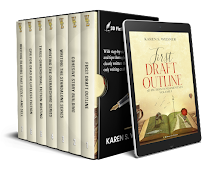
July 14-July 20 The 5 Book Kindle-only Omnibus is on sale, marked down from $3.25 to 99Cents then up a little. Individually, the books are 99c each.
They are all free to read on KindleUnlimited
I expect to be discussing writing craft using Tarot references.


Saturday, July 13, 2019
A Facebook Event Might Not Be The Best Venue To Organize Illegal Activities
Talking of legalities, this author would like to remind all visitors, especially those protected by vigilant European regulators, that this blog will drop cookies on your devices. When you ride the tail on the biggest dog on the internet, it is astoundingly generous in sharing its fleas.
Good device hygiene means clearing your devices' cookies, cache, and history often. You might notice CLOUDFLARE cookies.
Film maker and copyright blogger Ellen Seidler of Vox Indie has something to say about Cloudflare and the piracy it hosts and from which it profits, thanks to the inadequacies of the DMCA.
http://www.voxindie.org/piracys-scofflaws-all-roads-lead-through-cloudflare/
Ellen's interesting piece illustrates a copyright owner's judicious use of Search (of Whois + an alleged pirate sitename) to discover information.
In the same vein, but way more extensively, thetrichordist illustrates astounding investigative tactics to track down villains, conspiracies, downright illegal and wicked (alleged) organization of illegal activities for apparently furthering political and profitable agendas, and corruption in metaphorically high places.
Ajitation Event
It's very long, contains plentiful peregrinations (love that word!), but exposes some freakishly flexible definitions of acceptable behavior...and also the naivete of some Facebook users.
By the way, this week Wozniak warned the world to wean themselves rapidly off that site.
https://www.newsbusters.org/blogs/techwatch/alexander-dolhun/2019/07/11/wozniak-warns-public-get-facebook
Nothing to do with Facebook, piracy, conspiracy theories etc, but some light relief for science fiction story plotters, the wellness.com editor reports on a theory that a love of music is what separates humankind from simiankind.
https://www.wellness.com/blog/13294901/did-this-change-the-human-brain/wellness-editor?utm_source=1000-6030&utm_placement=newsletter&utm_medium=email&utm_campaign=newsletter&utm_content=WDCnewsletter
As this blogger read that article, one remembered philosophy, literature studies, and "the music of the spheres" ...
Meanwhile, SFWA adds its voice to that of copyrightalliance and authorsguild in urging individuals to contact their Representatives and Senators to express support for the CASE act.
SFWA members are invited to a fly in on July 18th to speak with Congress members and staff in person about the shortcomings of the DMCA and the need for a small claims process for small fry copyright owners who have had their copyrights infringed and have no remedy.
Email LegalAffairs@sfwa.org for more info.
Authors Guild shares this link to co-sponsors in the House (possibly to be thanked and encouraged)
https://authorsguild.us10.list-manage.com/track/click?u=727ad03949c981c140a2bf125&id=3f3d28917c&e=4daaa77539
And this link for Senators:
https://www.congress.gov/bill/116th-congress/senate-bill/1273/cosponsors?q=%7B%22search%22%3A%5B%22CASE+Act%22%5D%7D&r=3&s=1
Alas, this blogger's Representatives and Senators are not on the lists. One must write again. Now, dear Reader, please remember to delete cookies.
All the best,
Rowena Cherry
Good device hygiene means clearing your devices' cookies, cache, and history often. You might notice CLOUDFLARE cookies.
Film maker and copyright blogger Ellen Seidler of Vox Indie has something to say about Cloudflare and the piracy it hosts and from which it profits, thanks to the inadequacies of the DMCA.
http://www.voxindie.org/piracys-scofflaws-all-roads-lead-through-cloudflare/
Ellen's interesting piece illustrates a copyright owner's judicious use of Search (of Whois + an alleged pirate sitename) to discover information.
In the same vein, but way more extensively, thetrichordist illustrates astounding investigative tactics to track down villains, conspiracies, downright illegal and wicked (alleged) organization of illegal activities for apparently furthering political and profitable agendas, and corruption in metaphorically high places.
Ajitation Event
It's very long, contains plentiful peregrinations (love that word!), but exposes some freakishly flexible definitions of acceptable behavior...and also the naivete of some Facebook users.
By the way, this week Wozniak warned the world to wean themselves rapidly off that site.
https://www.newsbusters.org/blogs/techwatch/alexander-dolhun/2019/07/11/wozniak-warns-public-get-facebook
Nothing to do with Facebook, piracy, conspiracy theories etc, but some light relief for science fiction story plotters, the wellness.com editor reports on a theory that a love of music is what separates humankind from simiankind.
https://www.wellness.com/blog/13294901/did-this-change-the-human-brain/wellness-editor?utm_source=1000-6030&utm_placement=newsletter&utm_medium=email&utm_campaign=newsletter&utm_content=WDCnewsletter
As this blogger read that article, one remembered philosophy, literature studies, and "the music of the spheres" ...
Meanwhile, SFWA adds its voice to that of copyrightalliance and authorsguild in urging individuals to contact their Representatives and Senators to express support for the CASE act.
SFWA members are invited to a fly in on July 18th to speak with Congress members and staff in person about the shortcomings of the DMCA and the need for a small claims process for small fry copyright owners who have had their copyrights infringed and have no remedy.
Email LegalAffairs@sfwa.org for more info.
Authors Guild shares this link to co-sponsors in the House (possibly to be thanked and encouraged)
https://authorsguild.us10.list-manage.com/track/click?u=727ad03949c981c140a2bf125&id=3f3d28917c&e=4daaa77539
And this link for Senators:
https://www.congress.gov/bill/116th-congress/senate-bill/1273/cosponsors?q=%7B%22search%22%3A%5B%22CASE+Act%22%5D%7D&r=3&s=1
Alas, this blogger's Representatives and Senators are not on the lists. One must write again. Now, dear Reader, please remember to delete cookies.
All the best,
Rowena Cherry
SPACE SNARK™ http://www.spacesnark.com/ http://www.rowenacherry.com
Thursday, July 11, 2019
When Publishers Fold
Recently, author Delilah Devlin hosted me on her blog, where I wrote about what to do with books and stories "orphaned" by the closing of a publisher:
Rescuing Orphaned WorksIn re-releasing the fiction mentioned in this post, I had the advantage that those novels, novellas, and short stories had been thoroughly edited before their original publication. Therefore, I could have confidence that professional editors had already deemed them to be publishable. Still, I welcomed the opportunity to comb through them again. It's a rare piece of writing that gets into print with no typos, not to mention examples of minor stylistic awkwardness that need a bit of polishing. Also, one of the publishers that closed, Ellora's Cave, seemed to have an irrational aversion to commas. I'm delighted to be able to put the punctuation in those stories back where it belongs. As an English degree holder and former professional proofreader, I cringed to imagine that some readers would think I didn't know the right way to punctuate a sentence.
As you may know, the Marion Zimmer Bradley Literary Works Trust is publishing its final installments of the Darkover and "Sword and Sorceress" anthologies this year. I'm sure lots of other readers and writers will miss those books as much as I will. The Trust has also decided to let many earlier volumes go out of print. That was disappointing news, because I'd expected my stories in the older anthologies to remain available in perpetuity. Thanks to the Internet, e-books, and self-publishing, I was able to collect my "Sword and Sorceress" contributions in a Kindle collection. (The MZB estate gave Darkover contributors permission to reprint those out-of-print stories, too, but unfortunately I didn't realize until too late that the files were no longer on my hard drive. Luckily, Amazon has many used copies of the Darkover volumes for sale, so the books and their contents haven't faded into nonexistence.)
In addition to minor edits and corrections, another decision to face in re-issuing older works is whether to update the settings into the contemporary era. With my first vampire novel, DARK CHANGELING, I had a definite in-universe reason for the year of its action, because of when it made sense for the protagonist to have been born. Therefore, I didn't change the time period, with the result that the date of the direct sequel, CHILD OF TWILIGHT, explicitly set thirteen to fourteen years later, couldn't change either. That's one difficulty I could avoid with several of my fantasy stories; the culture of "fairy-tale realm" or "vaguely Dark Ages England" remains unaffected by advances in computer or cell-phone technology.
In a way, it's a pleasure to have control over the presentation of some of my older fiction. On the down side, a self-published author also bears the full burden of marketing and promotion. How does one stimulate fresh interest in books and stories that readers have already been exposed to in earlier releases?
Margaret L. Carter
Carter's CryptTuesday, July 09, 2019
Theme-Plot-Character-Worldbuilding Integration Part 13 - Historical Verisimilude
Theme-Plot-Character-Worldbuilding Integration
Part 13
Historical Verisimilitude
by
Jacqueline Lichtenberg
Previous parts in this advanced series are indexed at:
https://aliendjinnromances.blogspot.com/2015/12/index-to-theme-plot-character.html
When writing science fiction romance, you are telling a story that develops differently from the stories the reader has seen unfolding among their real life acquaintances.
The difference is caused by one element. The mistake many beginning writers make is the same mistake many beginning scientists make: varying more than one variable at a time.
Art is a selective recreation of reality, not reality itself. In reality itself, many things vary at once, and nothing stays the same for long.
Science is an art form, and as such is SELECTIVE in focus.
Humans do this selective narrowing of focus in art and in architecture, mechanics, agriculture, everything we do, because our minds can't handle too many variables at once. Even multitasking is done by cycling the selective focus rapidly between processes.
So we do this kind of narrowing in both story-reading and story-writing.
The writer "establishes" or nails down each variable at a time, usually on page 1, or at least in chapter 1, until only one thing is left to change under the impact of conflict-resolution processes.
For example, in writing a Historical -- the "setting" is nailed down as one of the first variables. -- it is THE PAST. How far past, what year, what era, are indicated by the details mentioned as the conflict is established.
In films, the automobiles (or carriages) by year-model or style will tell the viewer where and when this story is happening.
The writer decides WHEN and WHERE to set the story according to the THEME, and what the writer has to say about that theme.
We've discussed theme from many angles. Here is one of the series featuring theme:
https://aliendjinnromances.blogspot.com/2014/04/index-to-theme-worldbuilding.html
The theme is very often the solution or resolution of the conflict which generates the plot.
Once you have the theme, you can find the point in history where your theme is the resolution of a social or cultural conflict larger than the Characters you are writing about.
From that point, you have a clear path into the Plot, which is the series of events triggered by the actions or decisions of the Main Character.
If you're using real history, you already have your world built for you, but if you're doing science fiction or fantasy, or Paranormal Romance, you have to take the real world that was, and vary ONE ELEMENT to generate your alternate history.
For a very long series, you can pinpoint a different variable for each volume, so you can point out a long list of ways your pre-history varies from your reader's -- and thus how your alternate universe would lead to a different present the your reader lives in.
The trick to getting readers to suspend disbelief and go with you into your alternate-past is verisimilitude.
Even those who live in a mono-cultural world are aware of cultural norms, and the older readers are aware of how norms change, while younger readers see changed norms as "reality" and the world their elders live in as "fantasy."
One of the inescapable realities these days is the increasing speed with which our culture is changing.
One change ignored by many Historical Romance writers has to do with the implications of the embedded sexism of just 50 or 60 years ago. Such a few decades seems like ancient history to the modern Romance reader, but to some of the older people the reader works with, 50 years ago is the present.
We see that on the political stage as older people running for office casually, without thinking about it, put their hands on other people. We see it in offices where older people in decision making positions simply assume the privileges of those who preceded them.
Current young people assume (as the young always have) that their cultural values and behaviors are correct and morally superior to those of older (say, 70-somethings) people.
THEME: my culture is superior to yours, or to all cultures.
THEME: Modern = Better
THEME: Women who let men get away with it are contemptible
THEME: Women who refuse to let men get away with it are contemptible
Think about that. Which era in human history -- or future history -- would you choose to showcase each of those themes.
PLOT: A woman fights cultural norms and wins her freedom (Joan of Arc)
PLOT: A woman understands her place in a man's world, and prevails anyway, without confrontation
PLOT: A woman raises daughters to champion the cause of women (owning property, voting, holding a job with equal pay, not-having children).
PLOT: A woman refuses to obey men and dies a martyr
CHARACTER: A man learns his home is his woman's castle
CHARACTER: A man learns women make better bosses in the workplace
CHARACTER: A man proves women are not capable of a man's work
CHARACTER: A woman refuses to let a man get away with excluding her
All of these conflict lines raise the cultural questions related to THEME.
If you choose a setting of the 1960's going all the way back to Roman Empire Times, you have to deal with the realities of how woman raised in that culture reacted to being told "women can't do that." And contrary to modern Romance novels, women back then who made an overt issue of the "man's world exclusion principle," didn't succeed.
When women gained the right to vote in the USA, their husbands assumed the right to tell them how to vote. (honestly!)
How many actually did that might be calculated from the election results records. Most did, I suspect.
Why? Why would a woman not exercise independent judgement?
One answer would be that women are human, and had been raised in the same culture as the men.
Depicting that reality with your point of view Character's inner dialogue is as difficult today as depicting the inner dialogue of an Alien from outer space.
A respectable character with self-respect, a character the reader wants to identify with, will not knuckle under.
How could you explain the emotional reaction of a woman with all the requisite scientific credentials to apply for a particular job getting the following letter in response to her application?
This is a real letter sent to a real woman who was well qualified for the job she had applied for, and who was living far away at the time and couldn't go in for an interview. If she had, she would have been treated politely, as politely as this letter is phrased. At that time, this letter was POLITE, and proper, and not in any way discriminatory or offensive or illegal.


If that image is hard to see, here is a transcript of part of it.
------quote of old letter--------
While we very much appreciate your interest, I fear I see no way in which we can pursue with you very directly, at this stage, the possibility of your filling one of the positions advertised. Those positions actually are designed to prepare me for service in our regional editorial offices; we have found through experience that the nature of the duties and of the demands placed upon our regional editors is such that we cannot ask young ladies to undertake them.
We do have from time to time (and we have at this time) openings on the editorial staff of our research journals . The duties here are different from those on the staff of Chemical and Engineering News in that the work is almost entirely concerned with editing the contributions of other scientists, rather than gathering information and doing the writing oneself.
We should be glad to consider you for one of the latter positions, if you feel this kind of work would have strong interest for you, Even here, however, we could not consider placing you on our staff without having first explored the matter with you quite extensively through personal interviews here, Unfortunately, the distance between us--or more appropriately, the high cost of bridging that distance—makes it impractical to consider bringing interviewees. I fear that unless you find a way to travel and can then approach us from we shall not be in a very realistic position to discuss employment possibilities with you,
Your job as a Romance writer is to create a Character who would not be disturbed or offended by that letter, and would not see it as a symptom of something wrong with the world that she has to fix. Make the reader understand the inner world of that woman, walk a mile in her moccasins, and be comfortable in a world where gender is destiny. If you can do that, you are a science fiction writer. An Alien Romance would be no challenge to your skills.
Build your historical world, your theme, and your character's inner self-image so that, presented with this rejection letter, she believes that only men can do that work, and goes looking for other kinds of work.
Not, "I can do it but you won't let me," which is a child's response, but "I might be able to do it but I'd be miserable at it." And she takes herself off to do something she will be good at, and happy doing.
This would be a female character who has no chip on her shoulder and is fully mature. Her story is about how she triumphs by following a different path than she had expected to.
Or if you're playing with alternate universes, you can use two versions of this same woman, and show how, if she'd gotten the job, the whole world would be changed one way (say, she'd spark the invention of Artificial Intelligence), while if she didn't get the job, the world would be changed in another way (say, she raises a son who turns into the Bill Gates of that world).
THEME: the significance of a woman's life is measured only by the achievements of her son
Build a world where that truth is joyfully embraced by all women, who do not see that part of their world as in need of change. Those women are busy instigating some other change. What is that other change?
Jacqueline Lichtenberg
http://jacquelinelichtenberg.com
Subscribe to:
Comments (Atom)


 Posts
Posts