Thursday, April 01, 2021

Special Days

Here's a website that lists all the official, quasi-official, or just plain weird celebratory and commemorative days in the year:

National Day Calendar

Every date has multiple entries, so you should be able to find a special day for just about anything you want to celebrate. The explanatory page for each entry includes the commemoration's origin. Some that aren't official holidays have been established by individuals or organizations, while for others the website says it's still "researching" the source. In other words, they don't know. Since apparently anyone can register and add a day to the calendar, it's possible some of these "special days" are simply things made up by people who thought they would sound cool. They're fun to contemplate, anyway.

Here's a page on the history and possible origins of April Fool's Day:

April Fool's Day

These are just a few of the many "days" listed for this week in 2021, in addition to April Fool's Day and the Christian observances of Holy Week events: March 29 -- National Nevada Day, Lemon Chiffon Cake Day, Mom and Pop Business Owners Day, Vietnam War Veterans Day. (I suspect this last one is real for sure.) March 30 -- Take a Walk in the Park Day, I Am in Control Day, Virtual Vacation Day (probably a new invention for the current situation). March 31 -- Bunsen Burner Day, Clams on the Half Shell Day, Manatee Appreciation Day (founded by an organization dedicated to protecting endangered marine animals). This year April 1, April Fool's Day, is also dedicated to sourdough bread and burritos, as well as the regular annual National Take Down Tobacco Day, whose exact date varies. April 2 -- World Autism Awareness Day and National Reconciliation Day, plus an occasion to appreciate ferrets and peanut-butter-and-jelly (presumably not together). April 3 -- National Chocolate Mousse Day, Find a Rainbow Day, and Love Our Children Day (always the first Saturday in April, according to the website). April 4 -- in addition to being Easter Sunday this year, it celebrates school librarians, newspersons, geologists, and vitamin C, among other entities worthy of recognition. It's also listed as National Walk Around Things Day. Well, that's preferable to Tripping Over Things Day. :)

I can enthusiastically support Chocolate Mousse Day, for one. As for today, it's also designated National One Cent Day. The website doesn't identify its origin, but they offer an interesting overview of the history of the U.S. penny, of which we keep a can-full in a drawer, as many people do:

National One Cent Day

When my husband and I got married, in the mid-1960s, some gumball machines sold candy for one cent, and a retro bargain store near our first apartment carried a few items priced at a penny each. The value of a penny faded to essentially nothing long ago, yet we still understand what's meant by the proverb, "A penny saved is a penny earned."

Margaret L. Carter

Carter's Crypt
Tuesday, March 30, 2021

Sime~Gen praised on Twitter by Forgotten Realms writer Ed Greenwood

Sime~Gen praised on Twitter

 by

Forgotten Realms writer Ed Greenwood  

The title says it all. 

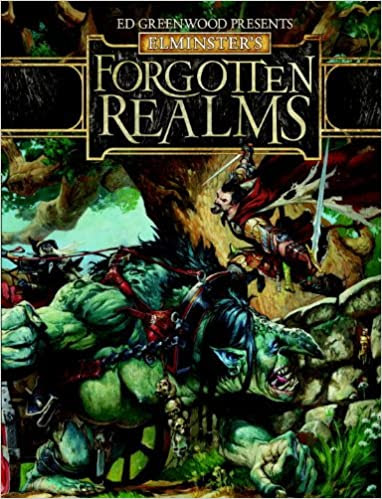
I was participating in a Twitter Chat ( #scifichat) one Friday when Ed Greenwood (  https://twitter.com/TheEdVerse ) of Forgotten Realms fame (and glory!) ...


https://amazon.com/Greenwood-Presents-Elminsters-Forgotten-Realms/dp/0786960345/

...was being interviewed.  He has over 20 thousand followers on Twitter.  

The following exchange happened quite spontaneously.

JLichtenberg @JLichtenberg

#scifichat an article I did for a Trekzine called SPOCK'S KATRA will be included in the WRITERS ON THE MOON project, so my byline will be in a time capsule on the Moon!

TheEdVerse's avatar

Ed Greenwood @TheEdVerse

Replying to @JLichtenberg

Awesome, indeed!

And being as you're here, I want to thank you VERY much for all the great Sime/Gen reads you've given me down the years. I re-read them!

Virtual hugs,

Ed

JLichtenberg's avatar

JLichtenberg @JLichtenberg

Replying to @TheEdVerse

#scifichat thank you for doing this interview at the chat today -- it was fascinating, and hard not to interject comments.


TheEdVerse's avatar

Ed Greenwood

@TheEdVerse

Replying to @JLichtenberg

Don't refrain from interjecting, please! More the merrier! I'm a reader first, a fan second, a writer third, and I LOVE hanging out with creative folks!

(I live in a small village where if someone suggests a book as a gift, the reply is usually, "Nope. She already has a book.")


Jacqueline Lichtenberg

http://jacquelinelichtenberg.com

Saturday, March 27, 2021

Reputation and Privacy

In Russia, they have "Face Pay". One pulls down one's mandated Covid-19 mask to be recognized, and ones bank account is debited, or whatever.

Apparently and allegedly, Amazon forces its delivery drivers to consent to biometric spying.
 
Large pharmaceutical businesses in America have a highwayman-like approach to would-be recipients of the Covid-19 vaccines, expressed as "Your data or your life." 
 
Apparently, and all kudos to EFF for this insight, all over America there may be a secret sale of fingerprints and other biometric data going on, largely without the knowledge or consent of the owners of the fingers, retinas, and other body parts and secretions.
 

The Kroger company has recently sent out letters to inform customers that their personal pharmacy and clinic information has been hacked. 

We have also heard that some of those genetic/DNA companies that we all thought were for tracing our relatives and our Neanderthal-or-not origins with a reasonable degree of privacy have been sold for "research" without our knowledge or consent.  They keep trying to get our consent retroactively. That research might be like the Japanese kill and eat whales for "research", or it might be the whooohaaan type of research, all the better to eat our collective lunch.

EFF also reveals some information about where advertising is going.  It is something to do with a flock of birds and predatory targeting.

Legal blogger Michael Yates, representing Taylor Wessing and a whole slew of high net worth celebrities no doubt, has a very interesting article. He gives reputation defending professionals five really good tips to protect their high powered clients, but published authors can use the info for themselves. We're public figures, too, and because our books' back matter usually contains photographs and biographical information, and there's a perception that we are perhaps younger and more financially successful than we really are (which is good for business, but not so good for flying under the radar) Michael Yates's tips might be worth bookmarking.

Here:

One good bottom line might be to freeze ones credit. It's free to do, and like a thong, you can take it off any time you like, and put it back on afterwards.

One last tip, for privacy if not reputation, an absolutely excellent You Tube review if you will of how secure your home title might be, as presented by the go-to Quiet Title lawyer.

https://www.youtube.com/watch?v=M9K1A5YoaR8

All the best,

Rowena Cherry 


Thursday, March 25, 2021

Virtual International Conference on the Fantastic in the Arts

Last week, from Thursday through Sunday, the International Association for the Fantastic in the Arts held its annual conference (normally in Orlando) virtually. Last year they skipped it completely. It was nice to get back "together," if only online. Unlike virtual ChessieCon in November 2020, with only live sessions (because, as usual, almost all were extemporaneous discussion panels) except for a slide show on costumes, the IAFA conference prerecorded or uploaded all the paper presentations. Only discussion panels, author readings, and events such as meetings weren't recorded.

You can check out the organization here:

IAFA

Disadvantages of the virtual con: Missing the hotel stay, the Florida weather, and the lavish meals. Not being able to watch all the "live" panels one might want to, because they weren't recorded for later viewing. No opportunity to see people face-to-face and talk at length. Also, one couldn't devote undivided attention to con events for the entire four days. Being physically at home, I could hardly pretend I wasn't there and ignore the pets, laundry, grocery shopping, etc.

Advantages: Much cheaper than the traditional conference. No need to leave home; I don't like traveling. The great pleasure of having flexibility on when to view most of the presentations. The complete program, with live links to prerecorded / uploaded papers and talks, was posted well before the actual weekend of the event and will remain on the website until the end of March. I think I got exposed to at least as many papers as I do when attending in person, maybe more. I also managed to fit in the few live sessions I felt a strong need to watch, e.g., the Lord Ruthven Assembly vampire panel, the LRA annual meeting, and the IAFA business meeting and awards presentation on Sunday evening. The best feature was being able to hear or read papers whenever convenient, without being forced to choose between them if they happened to be scheduled in the same nominal time slot—what a luxury!

I listened to Jean Lorrah reading from a forthcoming Sime-Gen novel, which of course I wanted to get right away. We have to wait, though, since it's not finished, much less published yet. The Lord Ruthven Assembly (our vampire, revenant, and Gothic division) had a lively panel on vampires called "The Dead Travel Fast," with a lot of discussion spinning off from the differences between the traditional folklore undead, usually bound to the vicinity of their mortal homes and families, and the wandering vampires of much fiction from Lord Ruthven (1819) on. Even though my computer doesn't have a microphone and camera, Zoom allowed me to watch sessions passively with computer audio, and the text chat sidebar enables written comments. I liked that method; it was nice and simple. A presentation on superheroes saving the world, referencing the widespread "Thanos Was Right" meme, brought up the concept of "fan labor"—how fan reception and response add value to commercially produced films and literature. Like many papers and discussions, this talk tied into the conference theme of the "Anthropocene," which inspired many presenters to discuss human impact on the environment as reflected in fantasy and science fiction. In other areas of interest to me, there were several papers each on Stephen King, Harry Potter, and Terry Pratchett. A talk focusing on Tolkien featured a slide show of maps. An advantage of viewing such material online is being able to see details better than one can from a seat in a meeting room. One of my favorite papers dealt with Delia Sherman's FREEDOM MAZE, exploring issues of identity and the "decentering" effect of the time-traveling teenage protagonist's landing in 1860 where she's mistaken for a slave, instead of a white Southern girl from a "good" family as she's been taught to think of herself in 1960. That presentation inspired me to reread the book, as a good piece of literary criticism ideally does.

The weekend concluded with the business meeting and awards on Sunday evening. IAFA's officers are considering the feasibility of offering some kind of virtual track every year, which would be useful to many members who can't travel to Florida for whatever reason. The plan faces potential problems and complications, however, not least the risk of seeming to establish a two-tier system of participation and the possible impairment of the deal with the hotel, in which perks such as meeting spaces depend on selling a certain minimum number of hotel rooms and meals. At any rate, this year's con seemed to rate as a brilliant success; it definitely was for me.

Margaret L. Carter

Carter's Crypt

Tuesday, March 23, 2021

Star Trek Fanzine Takes My Name, Jacqueline Lichtenberg, To The Moon

Star Trek Fanzine

Takes My Name, 

Jacqueline Lichtenberg, 

To The Moon 


I have an article in the fanzine, SPOCK’S KATRA, which will be sent to the MOON! 

Here’s the announcement I got via Facebook from Kirok L'stok

https://tupub-books.blogspot.com/2021/03/personal-logs-3-spocks-katra-stows-away.html


------quote------

Good news everyone! We're all going to the Moon!

Seriously!

At the end of January my good friend, writer, poet and all-round creative, Bron Rauk-Mitchell, signed on for the "Writers On The Moon" Project created by Susan Kaye Quinn, 'a rag-tag fleet of stories for a Lunar Time Capsule' which is going to be on the Peregrine lander.

Bron was allowed 20MB but has graciously given up some of her space on the mission to fellow creatives and I was lucky enough to be one of them. As you can guess, space was at a premium so only one book/file could go so I picked Personal Log 3, Spock's Katra, the Trekzine we put out in December, 2015 to commemorate the passing of Leonard Nimoy.

------end quote----

My article is titled Spock's Katra and starts on Page 49 of Personal Log 3, Spock's Katra.  The names of the authors are at the end of the 'zine. It's free to download.

Jacqueline Lichtenberg

http://jacquelinelichtenberg.com


Sunday, March 21, 2021

Blown By The Wind

David Oxenford's Broadcast Law blog is always informative, well written, and copyright-related. Recently, he discussed why, perhaps, "The Wind Done Gone" was a transformative adaptation of "Gone With The Wind", but the bold insertion of Star Trek characters into the Dr. Seuss story, "Oh, The Places You Will Go" was copyright infringement.

https://www.broadcastlawblog.com/2021/03/articles/dr-seuss-and-fair-use-just-because-you-make-a-funny-version-of-a-copyrighted-work-does-not-mean-that-you-will-escape-an-infringement-claim/#page=1

Oxenford does not delve into whether or not the JibJab political cartoons based on copyrighted songs were fair use or not. His analysis is thought provoking.

One wonders whether or not a mash up of news footage was inspired by the CME newsgroup advertisement How The World Advances with Brittany Lincicome (she drives a golf ball and it ends up at the feet of Sir Richard Branson on a large plane's staircase).  Is inserting a golf ball or three into a news clip "fair use"? 

Just because you make a funny version of a copyrighted work does not mean you are safe from a copyright infringement claim.

All the best,

Rowena Cherry

Thursday, March 18, 2021

Animal Regeneration

Here's an article about sea slugs that purposely decapitate themselves:

Decapitated Sea Slugs

It's believed they occasionally "jettison" their bodies to get rid of parasitic infestations. The abandoned torso (if that word applies to slugs) swims independently, sometimes for months, before eventually decomposing. The severed head, however, grows a whole new body, often within three weeks. Meanwhile, it continues to feed on algae as if it doesn't notice it has no digestive system, not to mention other essential organs such as a heart.

Self-amputation, called "autotomy," shows up in other species, such as lizards who let their tails detach to escape predators, then grow new tails. Starfish can generate new arms to replace severed limbs, and in some case a segment of a dismembered starfish can develop into a separate animal. In my high-school biology class, we bisected flatworms to watch the pieces regenerate over several days. Sea cucumbers sometimes eject their internal organs under stress and regrow the lost organs. Mammals, in contrast, have limited capacity for regeneration, but (according to Wikipedia) two species of African spiny mice shed large areas of skin when attacked by predators: "They can completely regenerate the autotomically released or otherwise damaged skin tissue — regrowing hair follicles, skin, sweat glands, fur and cartilage with little or no scarring."

Why do plants regularly lose limbs and grow new ones anywhere on their trunks, while most animals are much more limited in this respect? Why the difference in regenerative capacity between lizards and mammals, although they're all vertebrates? The sea slug's self-decapitation makes tales of vampires and other monsters that can re-grow lost appendages seem more plausible. The slug's independently moving detached parts remind me of a vampire novel by Freda Warrington in which a decapitated vampire regenerates a complete body from his severed head. Meanwhile, the headless corpse grows a new head; however, the resulting individual rampages mindlessly like a zombie. In the science fiction genre, I once read a story whose protagonist hosts a visiting alien at a house party. This alien's species has detachable limbs, so losing an appendage is no big deal for them. Also, this particular ET has a totally literal comprehension of English. When the protagonist compliments a concert pianist with the remark, "I wish I had her hands," the alien tries to do the host a favor by amputating those hands and presenting them as a gift. . . .

It's hoped that understanding the sea slug's remarkable ability "could one day lead to advances in regenerative medicine and other fields." Many science-fiction future technologies include medical treatments that enable injured patients to grow new organs and limbs. Maybe that vision might eventually come true.

Margaret L. Carter

Carter's Crypt